Your Ultimate Guide to Al Maktoum International Airport
2026-02-23
9,845 common.blog.views
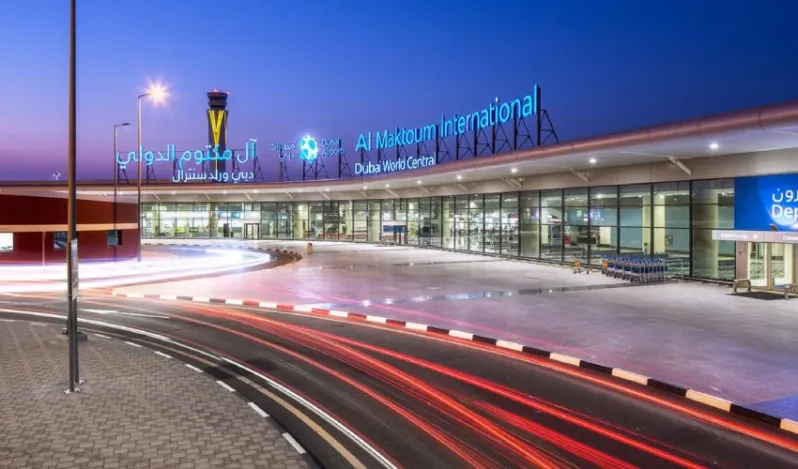


The modern artistic architecture of Dubai makes it an ideal tourist destination, and the diverse activities available in summer and winter make the tourism sector active throughout the year. This, in turn, gives great importance to the air transport sector to meet the needs of visitors coming from all over the world, and this prompts local authorities to develop international airports in Dubai, including Al Maktoum Airport, which we will explore in this article.
About Al Maktoum International Airport
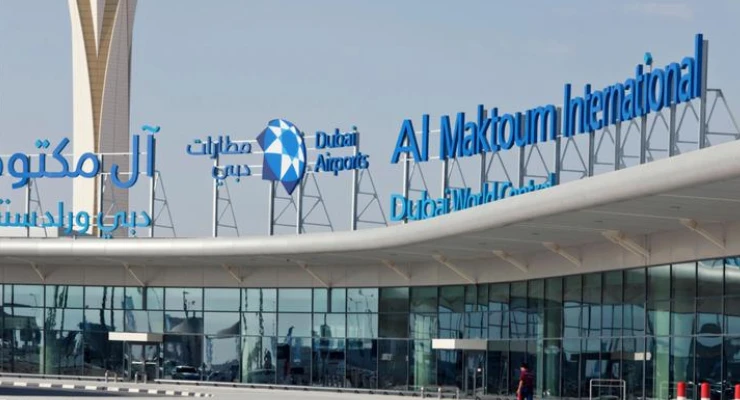
Al Maktoum International Airport was opened in Dubai as an embodiment of the Dubai government’s vision to improve and enhance the tourism sector strategy in the Emirates. The new Al Maktoum International Airport initially opened for cargo operations on June 27, 2010, and then opened its doors to passengers in 2013.
The airport is considered part of the Dubai World Central project, as the Al Maktoum Airport project is still under construction, and once completed, it will be the largest airport in the world with a capacity of more than 265 million passengers annually, on an area of up to 65 square kilometres, and approximately 15 square kilometres. million tons for shipping logistics services, and thus it will also be the largest cargo shipping centre in the world, occupying a strategic location near seaports.
Read also: Discover Real Estate in the Deira Area.
The Importance of Al Maktoum International Airport
Al Maktoum International Airport, often known as Dubai World Central (DWC), is a critical component in the aviation and logistics industries of the UAE and the wider Middle East. DWC's strategic location as a geographical crossroads between Europe, Asia, and Africa positions it as an important nexus for international travel and freight transit, connecting vital worldwide markets. The airport's scalability design positions it to become the world's largest airport, capable of accommodating up to 160 million people and 12 million tons of cargo per year once completed.
Furthermore, Economically, Al Maktoum International Airport is a cornerstone of Dubai's economic framework, considerably contributing to the emirate's GDP and strengthening industries such as tourism, trade, and logistics. The airport's development and continued operations are also beneficial to job generation, creating a plethora of employment options and strengthening the local economy.
Facilities at Dubai Al Maktoum International Airport
Al Maktoum International Airport provides a variety of amenities to promote a comfortable and efficient travel experience for passengers and cargo operations. Here's an outline of the main facilities offered at the airport:
- Passenger Terminal: Modern passenger terminals have vast check-in spaces, immigration desks, and security checks.
- Restaurants and cafés: A wide range of eating alternatives, from quick food to fine dining, featuring foreign and local cuisines.
- Duty-Free Shopping: Several duty-free stores sell a variety of things such as electronics, clothing, fragrances, and souvenirs.
- Essential Services: Medical centres, prayer rooms, and ample car parking are available to cater to your various needs.
Check out our offers for the best properties for sale in UAE.
Cargo and Logistics Facilities
On the logistics front, DWC offers superior warehouses with temperature control, freight forwarding services, and integrated logistics that connect smoothly to Jebel Ali Port. The shortened customs and clearance procedures allow for more efficient freight processing. Freight services include quick delivery and facilities capable of handling big and oversized items.
Expansion Future Plans And Developments
On April 28, 2024, Emirates stated that Dubai's ruler, Sheikh Mohammed bin Rashid al-Maktoum, has approved a massive expansion of Al Maktoum International Airport, including the construction of a new 128 billion AED passenger terminal. When completed, the airport will be about five times the size of the current Dubai International Airport, capable of accommodating up to 260 million people. According to plans, the airport will have five parallel runways and 400 aircraft gates. All Emirates and Flydubai operations are anticipated to move to the new airport by 2034.
Transportation To And From Dubai Al Maktoum Airport
Transportation to and from Dubai Al Maktoum International Airport is intended for convenience and accessibility, meeting the needs of all passengers. The airport is easily accessible by vehicle, with direct links from Dubai's major roads, including Sheikh Zayed vehicle (E11), Sheikh Mohammed Bin Zayed Road (E311), and Emirates Road (E611).
For those who prefer public transportation, the Dubai Metro Red Line provides a smooth link to the airport. Passengers can take the metro to Ibn Battuta Station and then transfer to the F55 bus for direct service to the airport. The F55A is an alternate bus route that runs directly from Satwa Bus Station to the airport.
Read also: Understanding Real Estate Ownership Structures.
Which is better DXB or DWC?
When comparing Dubai International Airport (DXB) to Al Maktoum International Airport (DWC), numerous criteria are taken into consideration. DXB is a famous airport that is conveniently positioned near Dubai's notable monuments and commercial districts, making it easily accessible to passengers. It is one of the world's busiest airports, with an extensive network of international flights and carriers. Dubai International Airport offers a wide range of amenities, including lounges, retail, dining and entertainment options, as well as efficient transport links such as the metro, buses, taxis and adequate parking. It runs smoothly, has a state-of-the-art infrastructure, and is known for providing exceptional customer service.
On the other side, DWC is located further south of Dubai's major districts and now serves as a supplementary airport to DXB. In comparison to DXB, it serves fewer airlines and destinations and has fewer passenger facilities. DWC has limited public transportation and parking alternatives. While its primary concentration is freight and transportation, initiatives are ongoing to increase its passenger services.
common.blog.share_article


common.blog.share_article