


The Future of Dubai’s Real Estate Market in 2026
2025-12-23
5,912 Views
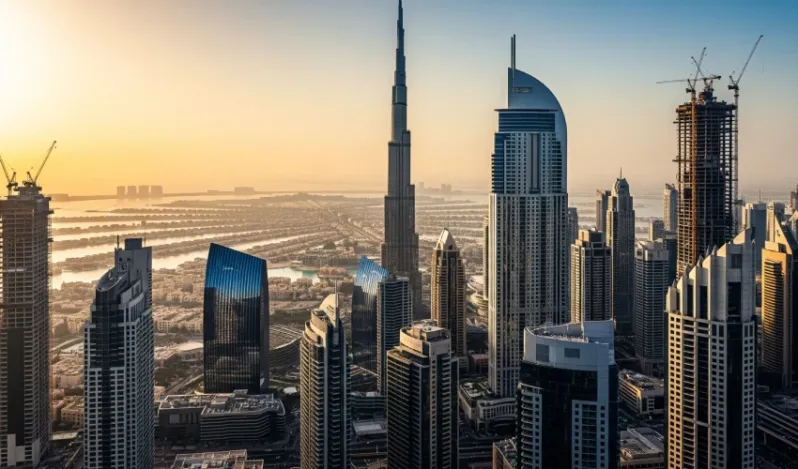


Dubai Real Estate Market 2026 is entering a phase of sustainable growth, driven by high-demand neighborhoods, premium developments, and investor-friendly policies, offering clear opportunities for long-term returns and strategic property investments.
- Price Dynamics for 2026: Balanced Growth Across Diverse Segments
- Yields and Occupancy: Stability at High Levels
- Structural Factors That Ensure Sustainable Growth
- Potential Challenges on the 2026 Horizon
- 2026: The Year of Strategic Investment
- Fractional Ownership: The Role of Tokenization and Off-Plan Properties in 2026
- Real Estate Tokenization: A Revolution Empowering Small Investors
- Golden Visa: Linking Investment to Long-Term Stability
- Dubai 2026, A Fully Integrated Global Investment Platform
- Start Your Investment Journey in Dubai 2026 Today
Price Dynamics for 2026: Balanced Growth Across Diverse Segments
The Luxury Sector
Following years of unprecedented growth—particularly in ultra-luxury villas and branded residences in areas like Palm Jumeirah and Umm Suqeim—prices are expected to see a gradual slowdown in growth rates.
This is not a decrease in value, but rather more moderate annual growth between 5% and 8%, compared to previous double-digit increases.
This shift reflects the fact that prices have reached record highs, limiting the pool of potential buyers. Moody’s forecasts a mild price correction due to increased supply of luxury projects scheduled for delivery by 2027.
As a result, the luxury segment will become more selective, with demand focusing on globally branded, high-value projects that offer unique advantages.
Apartments & Emerging Areas: Strong and Sustainable Momentum
In contrast, the residential apartment sector, especially in affordable and emerging communities, is expected to maintain strong momentum with anticipated growth of 10% to 15%.
Areas such as Dubailand, Town Square, and Jebel Ali will continue attracting residents and investors seeking added value and attractive rental yields.
These areas benefit from integrated infrastructure and prices that remain relatively accessible.
Moreover, off-plan properties will continue to outperform ready properties, supported by easy payment plans that enable both small and large investors to enter the market.
Yields and Occupancy: Stability at High Levels
With the continued influx of new residents and rapid population growth (expected to rise between 3.6% and 4% annually until 2027), occupancy rates will remain exceptionally high.
Rental yields are projected to stay stable at today’s attractive levels—between 5% and 7% in residential areas—making Dubai real estate highly competitive compared to traditional global investment tools.
Structural Factors That Ensure Sustainable Growth
Dubai’s real estate market is built on solid foundations that extend far beyond short-term fluctuations, as confirmed by S&P Global Ratings:
1. Legislative Reforms and Economic Initiatives
Government policies play a pivotal role in boosting investor confidence.
Programs such as long-term visas, including the Golden Visa for investors and talent (available with a real estate investment of AED 2 million), not only attract capital but also support community stability and long-term housing demand.
Innovative initiatives, such as the “First Home Ownership Program” and Real Estate Tokenization enabling fractional digital ownership, expand the investor base and reinforce transparency, making property acquisition easier than ever.
2. Financial Strength of Major Developers
Dubai’s major developers (such as Emaar and DAMAC) enjoy exceptionally strong financial positions.
According to Moody’s, these companies have significantly reduced their adjusted leverage ratios, expected to fall below 1x by 2026.
With accumulated revenues potentially exceeding AED 80 billion, these developers are capable of absorbing any slowdown in price growth, reinforcing the overall stability of the sector.
This financial resilience boosts long-term confidence in the real estate market as a whole.
3. Population Growth and Global Wealth Inflows
Strong and sustainable population growth (5.7% in 2024) remains a structural factor that reduces risks of oversupply.
Additionally, Dubai continues to attract high-net-worth individuals worldwide.
The number of residents with more than USD 1 million in liquid assets has surpassed 80,000.
This wealth inflow strengthens demand for luxury properties and solidifies Dubai’s status as a global hub for affluence and high-end living—reflected in continued sales of properties exceeding AED 20 million.
Potential Challenges on the 2026 Horizon
Despite the positive outlook, investors should be aware of certain local and global challenges:
- Large Supply Pipeline
With around 150,000 new residential units expected between 2025 and 2027, actual demand must match supply to avoid downward pressure on prices—particularly in mid-market apartment segments.
- Global Economic Conditions
Persistently high global interest rates increase financing costs, and a major recession in key global markets may impact international investment flows into Dubai.
- Regional Market Dynamics
Although Dubai leads the UAE, neighboring markets, such as Abu Dhabi (stable growth), Sharjah, and Ras Al Khaimah (affordable and tourism-driven markets), offer competitive alternatives that require monitoring.
2026: The Year of Strategic Investment
2026 will not be a year of quick speculation—it will be a year of smart and strategic investment.
The market is transitioning from rapid acceleration to maturity, and the greatest opportunities will be for investors who look beyond short-term numbers.
- Focus should be placed on:
- emerging areas with strong added value
- specialized sectors (logistics & commercial real estate)
- stable rental yields
- innovative ownership solutions
Fractional Ownership: The Role of Tokenization and Off-Plan Properties in 2026
As Dubai’s real estate market stabilizes and matures, a major shift is emerging in ownership and investment mechanisms, supported by government reforms and financial technology (FinTech). This shift broadens the investor base and opens doors for groups previously unable to enter the market.
Real Estate Tokenization: A Revolution Empowering Small Investors
Dubai’s tokenization initiative is one of the most influential future-shaping reforms for 2026 and beyond.
It transforms physical real estate into digital tokens that can be bought, sold, and traded on blockchain platforms.
Key advantages:
- Fractional investment: Investors can buy shares of luxury or commercial properties instead of entire units—lowering the entry barrier dramatically.
- Higher liquidity and transparency: Digital trading is faster, more efficient, and more transparent than traditional transactions, increasing asset liquidity.
- Global investor attraction: Tokenization appeals to digital-focused investors, enhancing foreign capital inflows and reinforcing Dubai’s position as a global proptech leader.
Golden Visa: Linking Investment to Long-Term Stability
The Golden Visa, granted for real estate investments of at least AED 2 million, remains a critical factor in maintaining long-term market stability.
It encourages actual ownership, long-term residency, and continuous housing demand, turning international investors into long-term residents.
Read more: Dubai Property Visa vs Golden Visa
Dubai 2026, A Fully Integrated Global Investment Platform
By 2026, Dubai will have evolved from a real estate market into a comprehensive global investment ecosystem.
Whether through fractional ownership, flexible off-plan payment plans, or residency-linked investments, Dubai continues to strengthen its appeal to global capital and open new horizons for investors of all segments.
Start Your Investment Journey in Dubai 2026 Today
Contact Imtilak Real Estate now for a free consultation that places you at the heart of the most valuable opportunities.
Make your strategic decision today—and let Imtilak be your trusted partner in achieving your investment goals.
Do you like this topic? You can share it with your friends now!


Do you like this topic? You can share it with your friends now!
More From Imtilak
Investment and real estate in Dubai
Arjan Dubai Area: A Guide to Living, Property Prices, and Investment 2026


Investment and real estate in Dubai
How to compare two real estate projects in Dubai before buying? A practical guide for investors
Investment and real estate in Dubai
The most prominent real estate projects expected to be delivered in Dubai before the end of 2026